













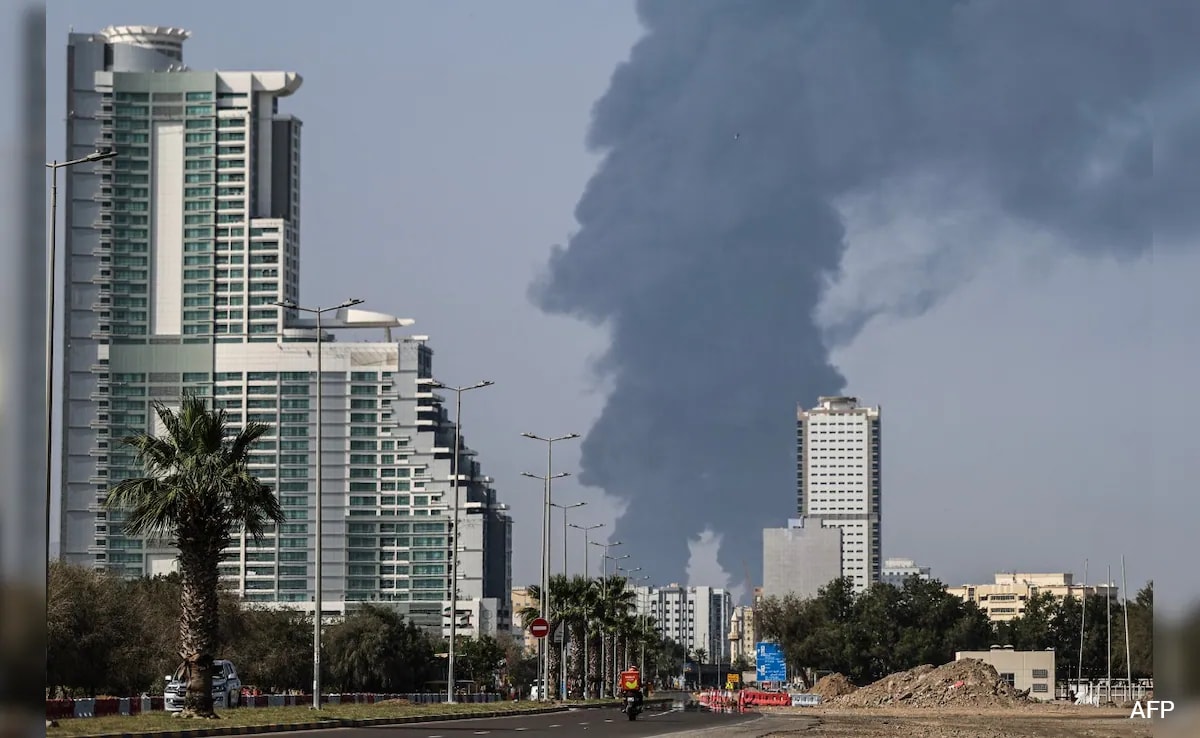










Share Markets Volatile As West Asia War Drags On, Sensex Near 74,550, Nifty Tests 23,200
Indian equity markets indicated a subdued start to the week on Monday, with benchmark indices trading slightly lower in the pre-open session as investors remained cautious amid persistent geopolitical tensions in West Asia, elevated crude oil prices and continued foreign fund outflows. The BSE Sensex rang the opening bell above 74,550, trading marginally higher, and the NSE Nifty50 tested 23,200 as the session began and inched up close to 50 points, around 9:15 AM. The cautious start comes after a steep correction in the previous week, when escalating tensions in West Asia, rising crude oil prices and heavy foreign investor selling triggered sharp losses in Indian markets. On the 30-share Sensex, UltraTech Cement, ITC, Tata Steel, Kotak Bank, and SBI emerged among the early gainers. On the other hand, the laggards included BEL, Bharti Airtel, M&M, Adani Ports, and Tech M. At around 9:03 AM in the pre-open session, the BSE benchmark was quoted at 74,393.26, down 170.66 points or 0.23 per cent. The Nifty stood at 23,101.15, lower by 49.95 points or 0.22 per cent, signalling a muted opening for domestic equities. In the broader markets, the Nifty Microcap250 slipped 0.70 per cent, while the Nifty50 inched up 0.12 per cent. Sectorally, the Oil & Gas index clocked a loss of 1 per cent, and the Metal index climbed 0.80 per cent. Markets Enter Week After Sharp Correction Domestic equities ended last week under significant pressure as global risk sentiment deteriorated amid rising geopolitical tensions and surging energy prices. The Sensex plunged 4,354.98 points or 5.51 per cent during the week, while the Nifty dropped 1,299.35 points or 5.31 per cent. The recent decline has been even sharper over the past few weeks. Since February 27, the 30-share BSE benchmark index has fallen 6,723.27 points, or 8.27 per cent, reflecting heightened volatility in financial markets. According to market experts, the sell-off was largely triggered by rising crude oil prices, worsening geopolitical developments in West Asia and persistent selling by foreign institutional investors. West Asia Conflict And Oil Prices Remain Key Drivers Analysts expect developments surrounding the ongoing conflict in West Asia to remain the most important factor influencing market direction this week. The conflict between the US-Israel alliance and Iran intensified from February 28 onwards, leading to heightened tensions across the region. The situation has disrupted energy supply routes and raised concerns about the stability of global oil markets. Particular attention is focused on the Strait of Hormuz, a critical maritime corridor through which a large portion of global oil shipments pass. The conflict has led to a blockade of the strait, raising fears of supply disruptions that could tighten global energy markets. "The week ahead is expected to remain highly volatile, with market direction largely influenced by developments surrounding the ongoing conflict in the Middle East," said Ponmudi R, CEO of Enrich Money, an online trading and wealth tech firm. He added that any prolonged disruption in shipping through the Strait of Hormuz could significantly impact global crude supplies, push inflation expectations higher and keep overall market sentiment fragile. Key Global And Domestic Data In Focus Apart from geopolitical developments, several important macroeconomic indicators and policy decisions scheduled this week could influence investor sentiment. Ajit Mishra, SVP - Research at Religare Broking Ltd, said market participants will closely track domestic data releases including the Wholesale Price Index (WPI) inflation numbers, balance of trade data and updates on India’s foreign exchange reserves. On the global front, investors will watch the US Federal Reserve’s interest rate decision and the Federal Open Market Committee (FOMC) economic projections for signals on the future path of monetary policy. Siddhartha Khemka, Head of Research, Wealth Management at Motilal Oswal Financial Services Ltd, said other global triggers this week include Eurozone inflation data, policy decisions from the Bank of England (BoE) and the European Central Bank (ECB), along with US jobs data. Foreign Investor Selling Continues To Weigh Foreign institutional investor activity has remained a major drag on domestic markets in recent weeks. Foreign investors withdrew Rs 52,704 crore (approximately $5.73 billion) from Indian equities during the first fortnight of March amid the escalating West Asia crisis, rupee depreciation and concerns over the impact of high crude oil prices on India’s economic growth and corporate earnings. Market participants believe sustained foreign selling has amplified market volatility and contributed to the sharp correction seen in frontline indices. Movements in the rupee and global crude oil prices are also expected to remain key indicators for market direction. Analysts note that higher crude p


Indian equity markets indicated a subdued start to the week on Monday, with benchmark indices trading slightly lower in the pre-open session as investors remained cautious amid persistent geopolitical tensions in West Asia, elevated crude oil prices and continued foreign fund outflows.
The BSE Sensex rang the opening bell above 74,550, trading marginally higher, and the NSE Nifty50 tested 23,200 as the session began and inched up close to 50 points, around 9:15 AM.
The cautious start comes after a steep correction in the previous week, when escalating tensions in West Asia, rising crude oil prices and heavy foreign investor selling triggered sharp losses in Indian markets.
On the 30-share Sensex, UltraTech Cement, ITC, Tata Steel, Kotak Bank, and SBI emerged among the early gainers. On the other hand, the laggards included BEL, Bharti Airtel, M&M, Adani Ports, and Tech M.
At around 9:03 AM in the pre-open session, the BSE benchmark was quoted at 74,393.26, down 170.66 points or 0.23 per cent. The Nifty stood at 23,101.15, lower by 49.95 points or 0.22 per cent, signalling a muted opening for domestic equities.
In the broader markets, the Nifty Microcap250 slipped 0.70 per cent, while the Nifty50 inched up 0.12 per cent. Sectorally, the Oil & Gas index clocked a loss of 1 per cent, and the Metal index climbed 0.80 per cent.
Markets Enter Week After Sharp Correction
Domestic equities ended last week under significant pressure as global risk sentiment deteriorated amid rising geopolitical tensions and surging energy prices. The Sensex plunged 4,354.98 points or 5.51 per cent during the week, while the Nifty dropped 1,299.35 points or 5.31 per cent.
The recent decline has been even sharper over the past few weeks. Since February 27, the 30-share BSE benchmark index has fallen 6,723.27 points, or 8.27 per cent, reflecting heightened volatility in financial markets.
According to market experts, the sell-off was largely triggered by rising crude oil prices, worsening geopolitical developments in West Asia and persistent selling by foreign institutional investors.
West Asia Conflict And Oil Prices Remain Key Drivers
Analysts expect developments surrounding the ongoing conflict in West Asia to remain the most important factor influencing market direction this week.
The conflict between the US-Israel alliance and Iran intensified from February 28 onwards, leading to heightened tensions across the region. The situation has disrupted energy supply routes and raised concerns about the stability of global oil markets.
Particular attention is focused on the Strait of Hormuz, a critical maritime corridor through which a large portion of global oil shipments pass. The conflict has led to a blockade of the strait, raising fears of supply disruptions that could tighten global energy markets.
"The week ahead is expected to remain highly volatile, with market direction largely influenced by developments surrounding the ongoing conflict in the Middle East," said Ponmudi R, CEO of Enrich Money, an online trading and wealth tech firm.
He added that any prolonged disruption in shipping through the Strait of Hormuz could significantly impact global crude supplies, push inflation expectations higher and keep overall market sentiment fragile.
Key Global And Domestic Data In Focus
Apart from geopolitical developments, several important macroeconomic indicators and policy decisions scheduled this week could influence investor sentiment.
Ajit Mishra, SVP - Research at Religare Broking Ltd, said market participants will closely track domestic data releases including the Wholesale Price Index (WPI) inflation numbers, balance of trade data and updates on India’s foreign exchange reserves.
On the global front, investors will watch the US Federal Reserve’s interest rate decision and the Federal Open Market Committee (FOMC) economic projections for signals on the future path of monetary policy.
Siddhartha Khemka, Head of Research, Wealth Management at Motilal Oswal Financial Services Ltd, said other global triggers this week include Eurozone inflation data, policy decisions from the Bank of England (BoE) and the European Central Bank (ECB), along with US jobs data.
Foreign Investor Selling Continues To Weigh
Foreign institutional investor activity has remained a major drag on domestic markets in recent weeks.
Foreign investors withdrew Rs 52,704 crore (approximately $5.73 billion) from Indian equities during the first fortnight of March amid the escalating West Asia crisis, rupee depreciation and concerns over the impact of high crude oil prices on India’s economic growth and corporate earnings.
Market participants believe sustained foreign selling has amplified market volatility and contributed to the sharp correction seen in frontline indices.
Movements in the rupee and global crude oil prices are also expected to remain key indicators for market direction.
Analysts note that higher crude prices can widen India’s current account deficit, increase inflationary pressures and weigh on currency stability, factors that often influence investor sentiment toward emerging markets.
What's Your Reaction?